
June 2025
GETTING IT RIGHT…
Versatile International has built a stand-out reputation for using high-grade natural stone as a keynote element in diverse project builds. The business has also launched an insightful, data-rich White Paper, ‘The Construction Pulse’, reviewing the challenges and trends impacting built environments across the GCC. ME Consultant spoke to Versatile’s CEO, Marco Fahd, about project management, the rise of sustainability – and solving challenges with advanced AI…
Marco, what was the motivation behind Versatile International launching The Construction Pulse?
“Our first Construction Pulse survey was launched to address a gap in data-driven insights specific to the Gulf construction sector. It provides stakeholders with clear, regionally relevant benchmarks. Our aim was to provide up-to-date, accurate forecasts regarding the challenges that regional construction professionals are facing, as well as forward looking predictions to allow them to make decisions.
Our plan is to produce further iterations of the survey, to update stakeholders on the sentiment in the sector and monitor key trends and challenges impacting the industry and driving change – topics such as skilled labour availability, the impact of technology, pressures on the supply chain, rework – and the demand for natural stone in the region.
Like industries across the globe, the construction sector is experiencing change due to global trends such as technology and sustainability. We noticed a lack of aggregated research reflecting what professionals on the ground are experiencing and how they are currently responding to those changes.
The survey is designed to be more than a snapshot; we plan to use it as a barometer tracking how industry sentiments and priorities evolve. For example, our data highlighting the main pain points during the construction process will no doubt change in a year, two years and a decade. Our White Papers further reinforce this with sector-level comparisons, giving indications regarding where demand lies.”
With the quest for sustainability being so important, tell us more about the advantages of using a material such as high-quality stone?
“Sustainability has become a non-negotiable in Gulf construction, and natural stone offers distinct advantages. It is a highly durable, low-emission material that can be locally sourced, reducing transport-related carbon footprints. Compared to concrete, for example, natural stone emits just one-eighth of the CO₂ per ton, thanks to a simpler, less energy-intensive processing method.
Additionally, natural stone’s longevity enhances a project’s lifecycle performance. It withstands harsh environments without frequent replacement, aligning with long term ESG goals. Its thermal mass also contributes to energy efficiency in buildings.
According to our research, 55% of professionals across the UAE and Saudi Arabia are prioritising local material sourcing as a way to boost sustainability. This trend reinforces the relevance of high quality, locally available materials like stone from quarries across the region.
“Stone is moving from being viewed as a commodity to being valued as a craft – one that must be strategically integrated into design and procurement from day one”
How would you like construction professionals to use and follow-through on the findings of The Construction Pulse?
“We want the Construction Pulse to assist as a future forward decision-making tool – not just an industry readout. These findings allow firms to benchmark themselves, identify gaps in their approach, make informed adjustments to recalibrate strategies accordingly.
For instance, our research found that 60% of construction professionals are already integrating Al-powered project management tools, to reduce delays and manage schedules. This provides a clear benchmark for firms to refer to, highlighting that the majority are integrating Al technology. More broadly, our research highlighted that Al was identified as the primary trend driving the construction industry with new technology acting as a useful solution for challenges beyond speed and optimisation, such as the lack of skilled labour in the region.
Our research also shows clear regional nuances with comparisons between the UAE and Saudi Arabia. In the UAE, 72% of respondents prioritised sustainability, compared to 31% in Saudi Arabia. Professionals can therefore refer to the survey to assess how expectations differ by market, and tailor their delivery and messaging accordingly.
Ultimately, this research is about forward-looking planning. We hope it becomes a reference point across project lifecycles, from procurement to project handover, to inform decision-making.”
Can stone play a key role in reducing aspects of project complexity?
Absolutely. When properly managed, stone can simplify multiple layers of the project lifecycle. At Versatile International, our unique business model provides complete oversight of the supply chain from design, sourcing, and installation, which removes many of the typical variables that create inefficiencies.
Our data showed that 57% of professionals see quality control as the main driver of rework. Stone, being the final visible finish, requires precision, and when mishandled, errors aren’t just aesthetic, they can derail project timelines and costs.
By handling this process end-to-end, we eliminate handover points, reduce miscommunication, and ensure alignment between design intent and execution. The result is fewer revisions, lower rework costs, and improved certainty.
Traditional models of natural stone procurement and installation are focused on shifting risk down the value chain. Versatile International partners with the asset developer across the entire supply chain, controlling risk by putting in place the right governance and installation processes from the start to deliver the vision.
As our White Paper notes, rework accounts for up to 30% of global construction costs which is also detrimental to sustainability goals. Rework in construction is a direct wastage of materials, energy, and labour, leading to increased carbon emissions, disrupted supply chains, and extended project timelines ultimately increasing the environmental impact.
With stone, early involvement of specialists like Versatile International can drastically reduce these inefficiencies.”
What current trends are we seeing in the use of stone in project conception and build?
“Several key trends are emerging. First, there is a greater appreciation for stone’s role in sustainability, with over half of respondents in our survey prioritising local sourcing, in part to align with growing ESG mandates across the region.
Secondly, we’re seeing growing demand for bespoke applications, from heritage-inspired facades to digitally-mapped stone layouts in ultra-modern developments. Stone is no longer a static element; it’s part of a broader narrative about placemaking.
Thirdly, quality assurance is taking centre stage. As delivery delays and installation issues emerge as major risks, more developers are turning to consultants like Versatile to mitigate these challenges through standardised QA protocols. Stone is moving from being viewed as a commodity to being valued as a craft – one that must be strategically integrated into design and procurement from day one.”
Do you see the use of stone as continuing the legacy and history of the region (staying true to local traditions, etc.)?
“At Versatile International, innovation means anticipating what the region’s most ambitious projects will need next and building solutions before challenges arise. We
see the Middle East construction sector is now evolving in two key ways: an increased demand for niche project management expertise or specialists, and a rising emphasis on innovation to overcome complexity and scale.
Our 360-degree perspective sets us apart. We’ve stood in our clients’ shoes as developers, procurement leads, and on-site project managers. This experience informs our approach, helping us remove layers of risk and deliver certainty from sourcing through to installation. That mindset is at the heart of everything we do – getting it right from the start.
It’s also what led us to launch Asheil Lighting Technologies last year, an end-to-end lighting supply model mirroring the success of our specialist consultancy work in stone. Like stone, large-scale lighting procurement is often fragmented. Through Asheil, we’ve applied our integrated business model to lighting, ensuring transparency, speed, and cost control while also investing in Saudi Arabia’s industrial future – we’re building a bespoke manufacturing plant in the Kingdom, supporting Vision 2030 by fostering local manufacturing, creating skilled jobs and advancing sustainable infrastructure. We’re not just building supply chains – we’re building regional capability and supporting Saudi Arabia’s transformation.
Our model is built to elevate the industry. We are raising standards while grounding every project in the region’s identity and ambition.”
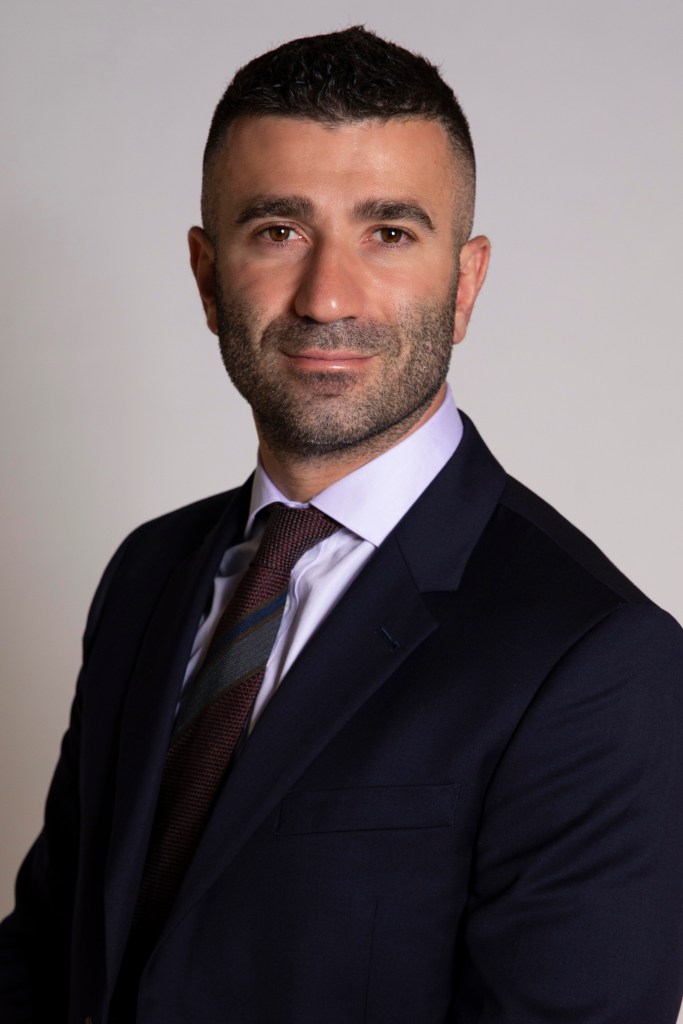
Marco Fahd, CEO, Versatile International.